When 3D Printing Isn’t Enough:Choosing CNC Machining for Functional Prototypes
3D printing has revolutionized early-stage prototyping.But when your project moves into functional testing,durability validation,or pilot runs,a 3D-printed plastic part often can’t simulate final performance.This is where DHT’s rapid CNC machining service becomes the critical next step.
The Limitations of 3D Printing for Functional Validation
Material Properties:Printed plastics(even high-temp resins)do not match the strength,stiffness,or thermal characteristics of production materials like aluminum,titanium,or PEEK.
Dimensional Accuracy&Stability:Printed parts can have layer adhesion issues,internal stresses,and lower accuracy,which can skew test results for mechanisms or load-bearing parts.
Surface Finish:The layered surface can create unwanted friction and does not represent a final machined or molded finish.
The Case for CNC Machined Functional Prototypes
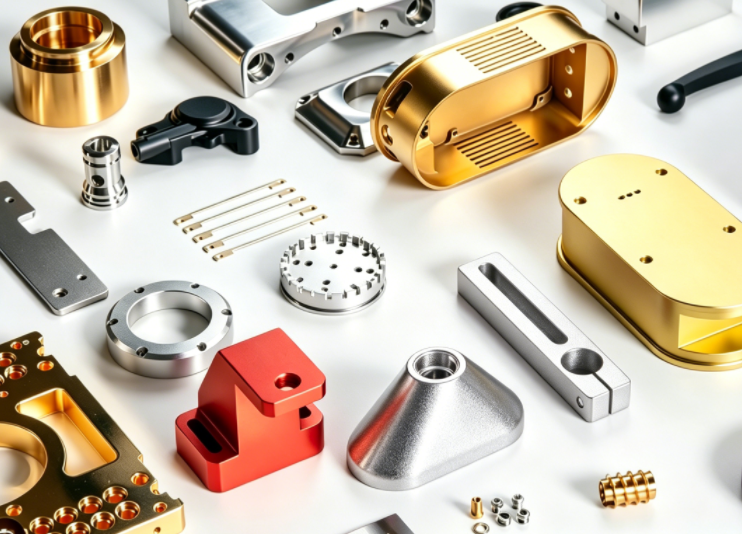
CNC machining from solid stock or near-net shapes produces prototypes that are virtually indistinguishable from final production parts.This is essential for:
Fit and Form Testing:Does it physically interface with all other system components?A CNC-machined part with±0.05mm tolerances gives a definitive answer.
Functional&Durability Testing:Can it withstand the actual loads,impacts,or cycles?Testing with a 7075-T6 aluminum or Ti-6Al-4V titanium part provides reliable data for design iteration.
Thermal and Environmental Testing:How does it behave under heat or in specific environments?Using the true engineering material is the only valid test.
DHT’s Rapid Prototyping Workflow
For teams that need speed and fidelity,DHT has optimized its process:
Quick-Turn Quote:We prioritize DFM analysis on prototype submissions to identify potential issues within hours,not days.
Dedicated Machine Time:We allocate capacity on our machining centers for rapid prototype jobs,often delivering first articles in 1-2 weeks.
Material Integrity:We use certified,traceable materials even for prototypes,ensuring your test data is valid.
Making the Right Choice
Use this simple rule of thumb:If the prototype’s purpose is purely visual or for very low-stress fit checks,3D printing is excellent.If the prototype needs to work under real conditions,survive testing,and provide valid data for production tooling decisions,CNC machining is the necessary investment.By integrating DHT into your development cycle after initial concept models,you compress the time between a”looks-like”and a”works-like”prototype,de-risking your path to production.