Achieving Maximum Thrust-to-Weight Ratio:Lightweighting Strategies for Racing Drones
In the world of FPV drone racing, victory is measured in milliseconds. The single most impactful way to gain an edge is to reduce weight, thereby improving acceleration, agility, and flight time. This guide dives into the structural lightweighting of the drone frame itself.
The Weight Enemy: Frame and Components
The frame is the foundational structure carrying all electronics. A heavy frame demands more power for the same maneuver, draining batteries and reducing punch. The goal is to create a structure that is absolutely stiff to prevent oscillation in high-G turns, yet minimally heavy.
Material Strategy: Hybrid Construction
The most effective frames use a hybrid approach:
Carbon Fiber Composite Arms: The arms experience significant bending and torsional loads. Monocoque carbon fiber arms, molded as a single piece, offer the best stiffness-to-weight ratio. Using unidirectional fibers along the arm’s length maximizes bending resistance, while ±45° woven layers handle torsion from propeller forces.
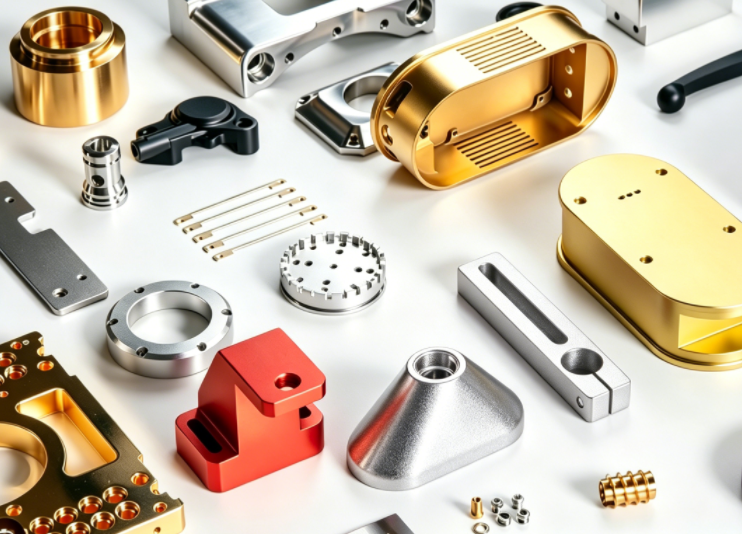
Machined Aluminum Center Plates: The central “stack” where flight controllers, ESCs, and cameras mount requires precise, flat interfaces and numerous threaded holes. CNC-machined 7075 aluminum is ideal here. It can be milled to be incredibly thin and light while providing a rigid, dimensionally stable platform for electronics. Strategic milling of lightening pockets on non-critical surfaces can shed further grams.
Design for Manufacturability and Durability
Lightweighting must not compromise durability. Key considerations include:
Arm Root Design: The junction where the carbon arm meets the center plate is a high-stress point. Designs should incorporate large, radiused fillets and sometimes molded-in or bonded metal inserts to distribute load and prevent delamination.
Component Integration: Designing mounting points for cameras, antennas, and batteries directly into the structure (e.g., molded grooves in carbon, machined slots in aluminum) eliminates the need for separate heavy brackets and fasteners.
Impact Resistance: While stiff, thin carbon can be brittle. Specifying a toughened epoxy resin system or a hybrid carbon/aramid weave in impact-prone areas can improve survivability without major weight gain.
The Prototyping Imperative
Aerodynamic and inertial forces on a racing drone are complex. Rapid prototyping is essential to test and refine the frame design. An iterative cycle of CAD → quick-turn carbon molding and CNC machining → flight testing → design adjustment allows teams to converge on the optimal balance of stiffness, weight, and durability in a single racing season.
Conclusion
Winning drone frames are a masterpiece of material selection and structural efficiency. By leveraging the strengths of carbon fiber for arms and precision-machined aluminum for the core, and by designing with both performance and manufacturability in mind, engineers can shave critical grams to build the fastest drones in the sky.